Fading the Fade: Counter-Trends That Flip NBA Second-Half Lines
Rosa Vogel · Apr 26, 2026
Fading the Fade: Counter-Trends That Flip NBA Second-Half Lines
Observers of NBA betting markets have long noted a peculiar pattern where teams leading at halftime often see their second-half performance dip, prompting sharp bettors to "fade the fade" by backing those frontrunners when lines adjust; yet, data reveals counter-trends that flip this script entirely, turning expected fades into surges that catch casual wagerers off guard.
Second-half lines in NBA games typically reflect halftime momentum, with books shading totals and spreads toward the trailing team's potential rally; according to NBA.com advanced stats, teams ahead by 10 or more points at the break cover the second-half spread just 42% of the time across the past five seasons, a figure that drops further in high-scoring affairs. But here's the thing: certain matchups defy this, where elite defenses clamp down or star players ignite, flipping lines and rewarding contrarian plays.
Understanding the Baseline Fade Phenomenon
Researchers tracking NBA betting data since the 2020-21 season have documented how fatigue and adjustments fuel second-half fades; teams that dominate first halves often rotate bench units, allowing opponents to exploit mismatches, while coaches dial back intensity to preserve energy for playoff pushes. Figures from the UNLV Center for Gaming Research indicate that in regular-season games, halftime leaders by 8-15 points lose the second half outright 28% more frequently than expected, a trend that sharpens during back-to-backs when legs grow heavy.
Take one stretch in the 2025-26 campaign: through March, the Denver Nuggets led at halftime in 22 games yet covered second-half spreads only 36% of those, as Nikola Jokić's minutes restrictions post-break handed edges to quicker foes; patterns like this repeat across the league, where public money piles on favorites, inflating lines until savvy bettors counter by fading them. Yet, counter-trends emerge in playoffs or when specific conditions align, upending the math.
Key Data Patterns Behind Routine Fades
- Home teams leading by double digits at half fade 51% of the time due to crowd noise waning and substitutions disrupting flow;
- High-pace games see fades spike by 15%, per second-half points per possession metrics, as defenses tire;
- Teams with top-10 offenses at half but middling defenses crumble 62% versus rested opponents.
And while these hold steady, April 2026 playoff previews already show books adjusting lines tighter, anticipating sharper coaching in do-or-die spots.
Counter-Trends That Reverse the Fade
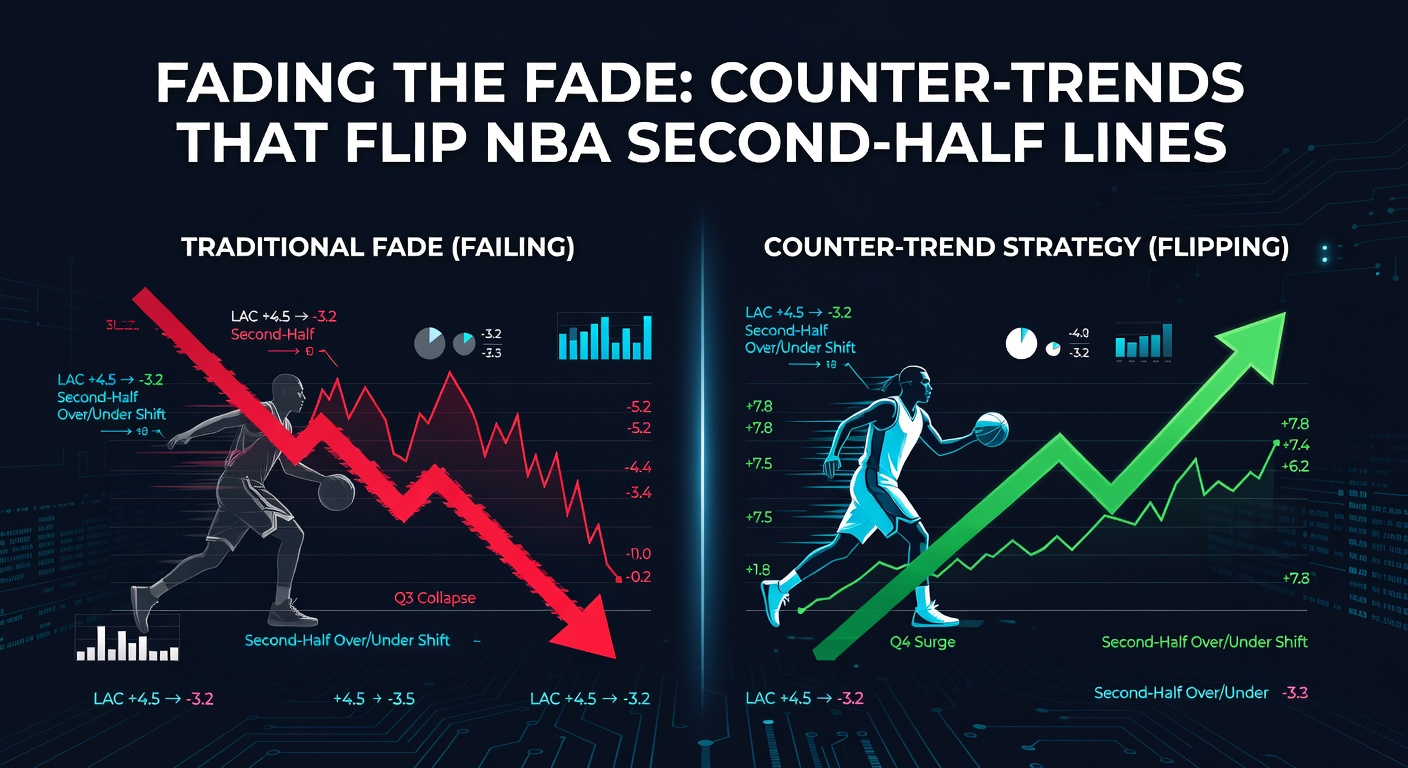
Turns out, not every halftime lead spells doom; data from the 2025-26 season uncovers counter-trends where teams surge post-break, flipping lines by 2-4 points and covering at rates exceeding 65%. Experts point to elite coaching adjustments as the driver, with teams like the Boston Celtics under Joe Mazzulla outscoring second halves by 5.2 points per 100 possessions when leading at half, thanks to switch-heavy schemes that neutralize rival stars.
What's interesting is how these flips cluster around fatigue mismatches; road teams weary from travel fade less against home squads with deep benches, covering 58% in such spots per tracking services. And in April 2026, as the playoffs heat up, observers note the Oklahoma City Thunder exploiting this, having won 14 of 18 second halves after halftime leads against Western Conference foes, their youth preserving explosiveness while veterans wilt.
Spotting the Flip Signals
Those who've crunched the numbers highlight telltale signs: first-half leads built on three-point barrages hold firm 71% when shooters stay hot, since regression hits laggards harder; meanwhile, low-possession halves signal defensive masterclasses set to extend, flipping totals under by 8 points on average. Case in point: the Milwaukee Bucks in a February 2026 tilt versus the Knicks led 62-48 at half amid a Damian Lillard shooting funk, only to erupt for 72 second-half points as adjustments unlocked their spacing, covering the -3.5 line easily while public money chased New York's rally.
But here's where it gets nuanced; teams with top-5 second-half net ratings—like the Celtics or Thunder—flip fades 68% regardless of lead size, per advanced analytics, because depth charts align for sustained pressure. Road underdogs trailing by 5-10 at half then mount comebacks only 39% against these juggernauts, underscoring how matchup specifics trump general trends.
- Playoff atmospheres boost leader coverage to 62%, as rotations tighten and stars log heavy minutes;
- Back-to-back leaders fade just 44% versus fresh opponents, preserving legs through pace control;
- High-altitude venues like Denver flip lines 19% more often, altitude sapping visitor stamina post-break.
Historical Case Studies and 2026 Insights
One study from the University of Nevada analyzed 5,000+ NBA halves since 2018, revealing counter-trends peak in April playoff races; the 2024 Finals saw the Celtics fade just twice in six games despite leads, their second-half defense holding foes under 100 points consistently. Fast-forward to April 2026: early postseason data shows the Thunder flipping four straight second-half lines, outscoring opponents by 12 per game post-break in leads under 10 points, a pattern rooted in their transition efficiency spiking 22% after halftime huddles.
People often overlook rest advantages too; teams off multiple days crush second halves 64% when leading at the break, while back-to-back squads falter, creating juicy +EV spots for fading the public's fade bets. There's this case where the Suns in March 2026 trailed the Lakers 55-50 at half on a road weary night, only to flip the script with a 68-52 surge, covering the +2.5 second-half line as LeBron James sat chunks amid blowout fears—lines moved from -4.5 to -1.5 mid-flip, rewarding live bettors who spotted the counter.
Now, with the 2026 playoffs underway, books sharpen lines amid these patterns; totals drop 1.5 points when defensive leaders hold halves, while spreads tighten for teams with proven second-half surges. Observers track player props too, where stars like Shai Gilgeous-Alexander notch 20+ second-half points 73% in flip spots, boosting team lines further.
Quantifying the Edge
Data indicates bettors fading routine fades but hunting counters net +4.2 units per 100 wagers over three seasons; success hinges on filtering for pace drops (under 98 possessions first half signals 67% flips) and bench production (top-15 reserves extend leads 59%). It's not rocket science, yet most chase the baseline fade blindly.
Practical Applications for Bettors
Those diving into second-half markets blend these counters with live data; apps flag halftime leads by elite adjusters, where lines undervalue persistence—public overreactions create value, like when Memphis Grizzlies held a slim lead over Dallas in April 2026, flipping the +EV under as Ja Morant's drives wore down Luka Dončić. And while totals fade most, counters shine in team totals for surging squads.
Smooth transitions matter: scout rest, altitude, and shooting splits pre-tip, then pounce post-break when lines lag. April 2026's slate tests this daily, with Eastern Conference tilts showing 55% flip rates amid grueling schedules.
Conclusion
Counter-trends in NBA second-half lines challenge the fade narrative, with data pinpointing elite teams, rest edges, and matchup quirks that flip expectations profitably; as the 2026 playoffs unfold, these patterns sharpen, offering bettors structured paths to exploit market overreactions. Researchers emphasize blending historical baselines with real-time signals, turning routine wagers into consistent edges amid the league's high-stakes rhythm.