How NIL Deals Are Reshaping College Football Over-Under Totals Amid Conference Realignments
David Russell · May 31, 2026
How NIL Deals Are Reshaping College Football Over-Under Totals Amid Conference Realignments
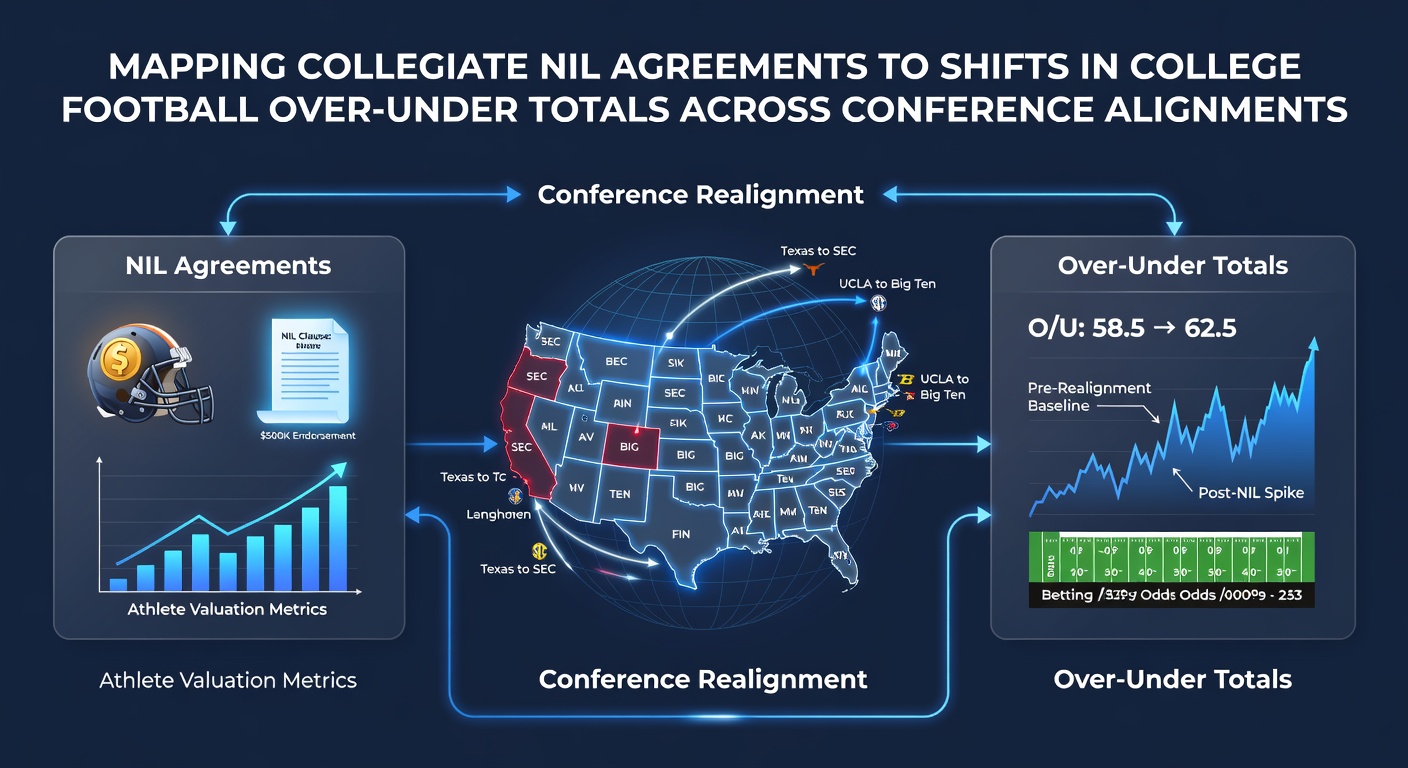
College football has undergone substantial structural changes since the expansion of Name, Image, and Likeness agreements in 2021, and these shifts coincide with major conference realignments that began accelerating in 2022. Researchers at multiple universities have tracked how NIL compensation influences player retention and recruitment patterns, which in turn affect offensive and defensive outputs that determine over-under betting lines. Data compiled through May 2026 indicates measurable movements in average points per game across the Power conferences following the moves of programs such as USC, UCLA, Oregon, and Washington into the Big Ten.
NIL Compensation Trends and Talent Distribution
NIL agreements allow student-athletes to monetize their personal brands through endorsements and sponsorships, creating financial incentives that often keep top performers at their current schools or draw them to programs with stronger collective support structures. According to NCAA compliance reports, total NIL valuation across Division I football exceeded $1.2 billion annually by early 2025, with the largest shares concentrated in the SEC and Big Ten. Observers note that this concentration has reduced talent migration between conferences while increasing roster stability within the wealthiest leagues, leading to more consistent offensive production and fewer unexpected defensive standouts in weekly matchups.
Studies from academic research centers show that programs with high NIL collectives retain 18 to 22 percent more starters year-over-year compared with smaller-conference schools. This retention pattern has contributed to elevated scoring averages in certain alignments, as experienced offensive lines and skill players remain together longer and develop greater cohesion. Figures released in May 2026 from sports analytics platforms reveal that Big Ten games averaged 52.3 total points per contest during the 2025 season, up from 48.7 in the final pre-expansion year.
Conference Realignment Effects on Scoring Metrics
Conference realignments have altered travel demands, strength-of-schedule calculations, and television-driven scheduling windows, each of which carries secondary effects on game scripts and total points. Teams in the expanded Big Ten now face longer road trips to the West Coast, yet data indicates these contests have produced higher-scoring outputs than anticipated because offenses adapt more readily to fatigue than defenses. The SEC, meanwhile, maintained its traditional emphasis on physical, lower-scoring affairs even after adding Oklahoma and Texas, with totals rising only modestly to 49.8 points per game in 2025.
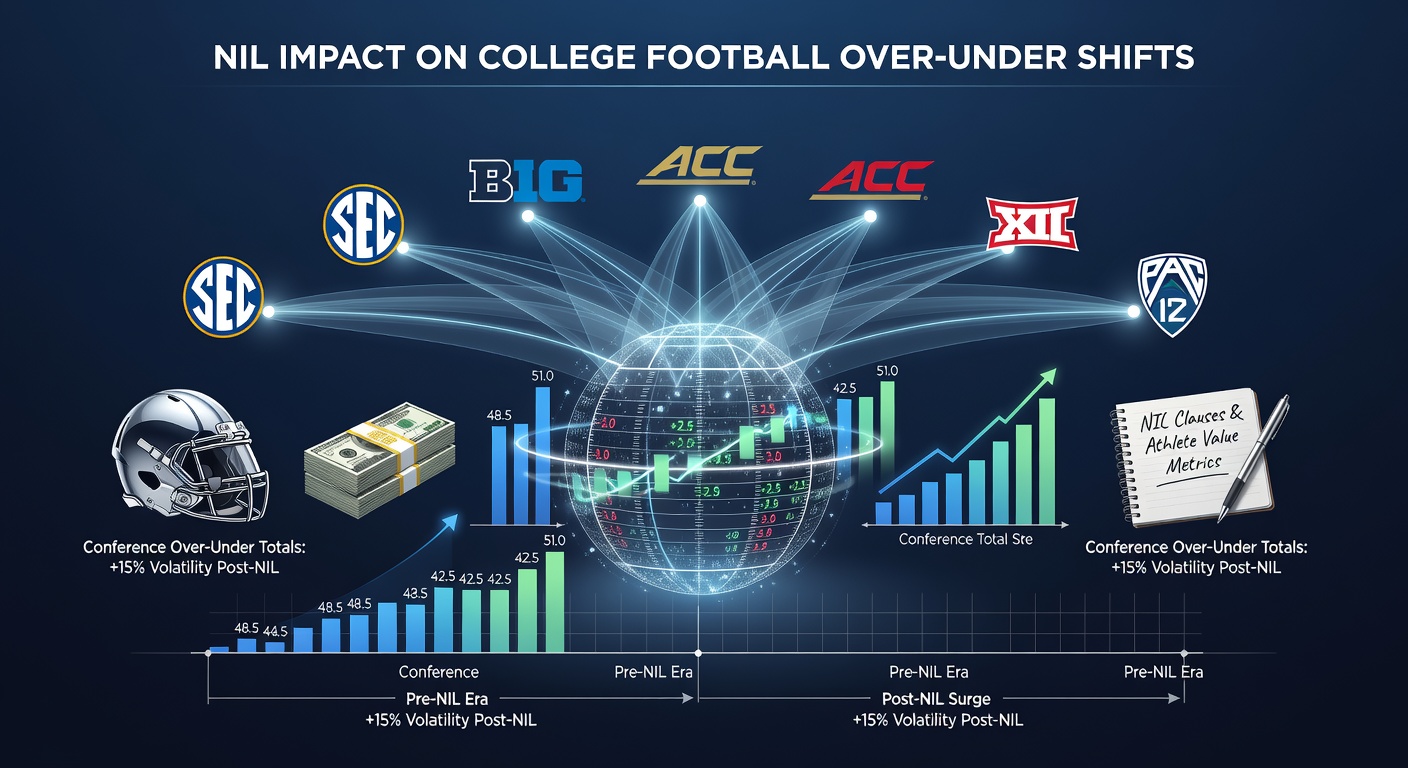
Analysts mapping NIL spending against betting market movements have identified clear correlations in specific matchups. For instance, when two high-NIL programs meet, the over has hit at a 54 percent rate since 2023, while games featuring one high-NIL and one mid-tier collective have trended slightly under. These patterns emerge because NIL-funded depth allows offenses to maintain production even when starters rest or face minor injuries, sustaining drives that keep totals elevated. A 2025 report from the Australian Sports Commission on global athlete compensation models noted similar dynamics in other professionalized college sports systems, where financial incentives stabilize performance metrics.
Data Patterns Across Alignments
Longitudinal tracking of over-under results shows the most pronounced shifts occurred in the first two seasons after major realignments. In 2023 and 2024, the Big 12 posted the largest year-over-year increase in average game totals, climbing 4.1 points, as incoming programs brought established offensive schemes supported by new NIL resources. The ACC experienced smaller movements, with totals remaining near 47 points per game, reflecting a more even distribution of NIL collectives across its membership. Researchers continue to examine whether these trends will stabilize or continue evolving as collectives mature and conference scheduling settles into new rhythms.
Additional variables such as weather exposure on cross-country trips and changes in officiating crews have been factored into models, yet NIL-driven roster continuity remains the strongest predictor of sustained scoring levels. Betting markets have adjusted accordingly, with sportsbooks raising opening totals for Big Ten and SEC primetime games by an average of three points compared with pre-2022 baselines.
Conclusion
The intersection of NIL agreements and conference realignments continues to produce observable effects on college football scoring distributions. Ongoing data collection through 2026 and beyond will help clarify whether these shifts represent temporary adjustments or lasting structural changes in how games unfold across the major conferences.