State Policy Shifts Reshaping Multi-League Digital Betting Portfolios
Hugo Russell · Jul 31, 2026

State Policy Shifts Reshaping Multi-League Digital Betting Portfolios
State legislatures continue to adjust sports wagering statutes throughout 2026, and these modifications create direct consequences for operators who maintain integrated digital portfolios spanning the NFL, NBA, MLB, NHL, and emerging soccer and college competitions. In July 2026 several jurisdictions enacted or proposed amendments that alter tax structures, data-sharing mandates, and geofencing requirements, while operators must recalibrate risk models and product offerings across multiple athletic calendars simultaneously.
Key Regulatory Developments in Mid-2026
Observers note that Pennsylvania and New Jersey updated their reporting thresholds for in-game wagering activity, requiring platforms to submit real-time transaction feeds to state regulators within shorter windows than previously mandated. At the same time, Illinois introduced tiered tax rates tied to handle volume per league, which forces portfolio managers to rebalance exposure between high-volume NFL markets and lower-volume MLB daily propositions. These changes arrive while operators integrate additional college conference realignments into their systems, and the resulting compliance burden falls on unified technology stacks that serve all leagues from a single user account.
Tax and Fee Adjustments Across Jurisdictions
According to data released by the National Conference of State Legislatures, at least nine states modified their sports betting tax formulas between January and July 2026. Several states shifted from a flat revenue tax to a graduated structure that applies different rates to retail versus mobile handle, and this distinction matters for portfolios because mobile users tend to place more cross-league parlays involving NBA and MLB events in the same session. Operators report that the new structures require separate ledger tracking for each athletic league within the same digital wallet, increasing backend complexity without changing the customer-facing interface.
Yet the adjustments extend beyond tax rates. Michigan and Virginia now require operators to maintain separate player risk profiles segmented by sport, citing concerns over rapid-fire live betting in NBA and NHL games. Portfolio teams therefore segment capital allocation models so that exposure limits adjust automatically when a user moves from one league's market to another within the same session.
Operational Impacts on Cross-League Portfolios
Integrated platforms must now map every state-specific rule onto league calendars that operate on different seasonal rhythms. MLB games stretch across six months with daily volume, while the NFL concentrates high-handle events into seventeen weeks, and the NBA overlaps both. When a state imposes daily reporting on live bets, the MLB portion of the portfolio generates far more data packets than the NFL portion, and engineers must ensure the same compliance layer handles both without latency spikes during overlapping game windows.
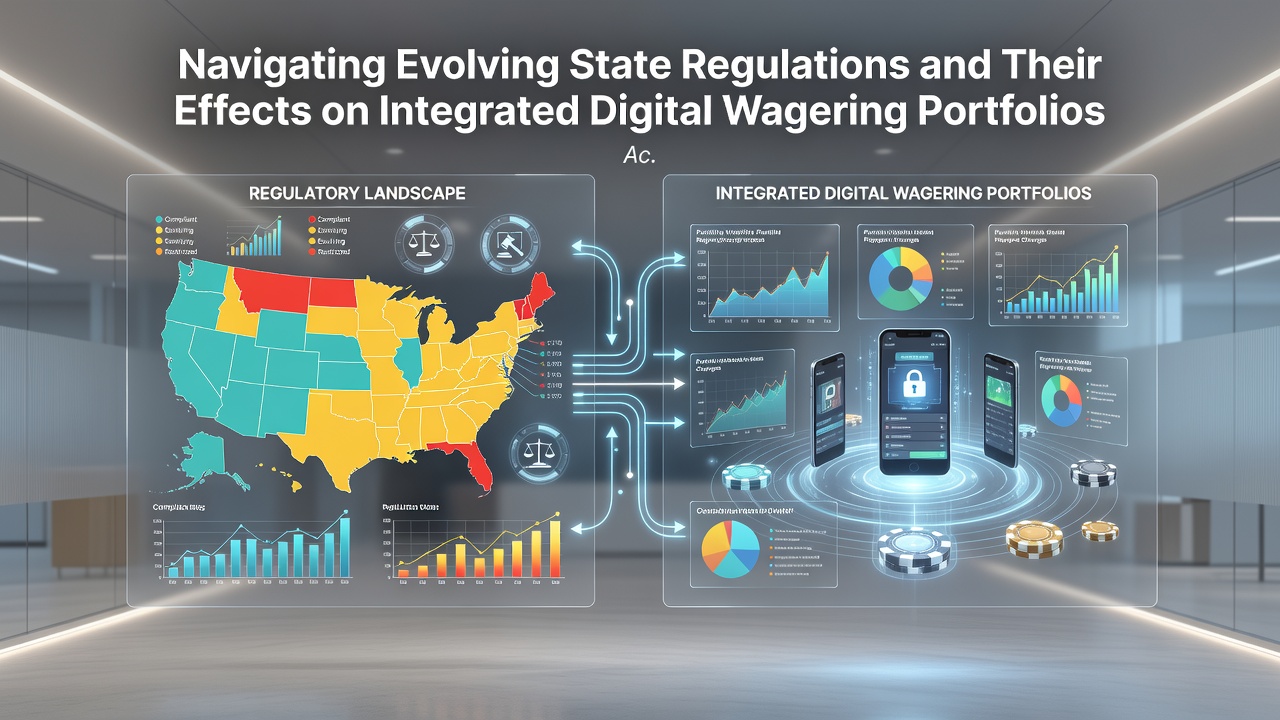
Research from the University of Nevada Gaming and Hospitality Research Center indicates that operators with unified accounts across leagues experienced a measurable increase in compliance staffing costs during the first half of 2026. The study tracked platform modifications required to accommodate new geolocation checks that activate differently for college football versus professional baseball markets. Those modifications involved updates to IP verification services and device fingerprinting protocols, which then propagate across the entire portfolio rather than remaining isolated to one sport.
Data-Sharing and Responsible Gambling Mandates
Additional rules in Ohio and Arizona now require operators to share anonymized betting patterns with state health agencies when activity crosses multiple leagues within short time frames. Portfolio managers therefore build aggregation tools that flag accounts showing elevated activity in both NFL Sunday games and midweek MLB totals, and these flags trigger automated responsible gambling prompts that must comply with each state's distinct messaging requirements. The result is a single user experience governed by multiple overlapping regulatory scripts.
Industry associations such as the European Gaming and Betting Association have published comparative analyses showing how U.S. state rules diverge from frameworks used in Australia and parts of Canada, where centralized regulators apply uniform standards across all sports. U.S. operators cannot rely on those centralized models and instead maintain state-by-state rule engines that update whenever legislatures convene.
Technology and Compliance Integration
Platform providers responded by expanding modular compliance layers that sit between the core betting engine and each state's reporting endpoint. These layers tag every wager with league identifiers, time stamps, and user location so that tax calculations, risk limits, and data exports route correctly. When a new rule appears in one state, developers push updates that affect only the relevant segment of the portfolio while leaving other states untouched, although testing still requires simulation across all active athletic leagues to prevent unintended side effects during live events.
Figures from state revenue reports released in July 2026 show that mobile handle continues to represent the majority of activity across every major league, which amplifies the importance of consistent geofencing and age verification protocols. Operators note that a single failed verification on a college basketball bet can temporarily restrict an account from placing NFL futures, because the restriction operates at the account level rather than the sport level.
Conclusion
State regulatory evolution in 2026 requires operators to maintain dynamic, league-aware compliance systems within unified digital portfolios. Tax structures, reporting timelines, responsible gambling triggers, and data segmentation rules now differ by jurisdiction and must map onto calendars that never fully align. Those who manage these portfolios continue to refine backend architecture so that updates in one state propagate correctly without disrupting operations tied to other athletic leagues or other regulatory environments.