Umpire Zones Exposed: How MLB Crew Chiefs Shape Run Line Value
The Role of MLB Crew Chiefs in Game Dynamics
MLB crew chiefs, those veteran umpires leading four-person teams across 162-game seasons, hold subtle yet powerful sway over on-field decisions; experts tracking umpire performance have long observed how their presence at home plate correlates with strike zone tendencies that ripple through scoring outcomes. Data from automated tracking systems reveals consistent patterns, where crew chiefs call strikes 2-3% more frequently than junior umpires in similar spots, often tightening zones low and away while expanding them up and in for right-handed batters. And while rotations ensure variety—home plate duties shift nightly—crews stick together for weeks, imprinting a collective style on series after series.
Take the 2025 season, for instance; figures from Statcast breakdowns show crews under chiefs like Ted Barrett averaged 0.12 more runs per game than league norms, a shift driven by fewer walks issued despite similar ball counts. But here's the thing: this doesn't happen in isolation, since crew chiefs mentor their teams, fostering zones that align with their calibrated eyeshaped by decades behind the mask. Observers note that such uniformity turns multi-game sets into predictable environments, where bettors eyeing run lines—those -1.5/+1.5 spreads mimicking football's point handicaps—find edges in crew matchups.
Strike Zone Variations: Data That Doesn't Lie
Strike zones aren't static; Umpire Scorecards data, pulled from thousands of plate appearances, exposes how individual umps deviate from the rulebook's knee-to-chest rectangle, with some crews shrinking it vertically by up to 4 inches on average, leading to ballooned walk rates and juiced scoring. Researchers analyzing 2024-2025 games discovered that crews led by expansion-era chiefs like Dan Iassogna posted accuracy ratings above 95%, yet their zones favored pitchers, suppressing runs by 0.08 per contest compared to looser-calling groups under chiefs such as Jim Reynolds. What's interesting is the clustering: tight-zone crews cluster runs under the total 54% of the time, while generous ones push overs at 52%, margins that compound over a series.
And yet, technology amplifies these insights; Baseball Savant heatmaps illustrate how crew chiefs adjust mid-game, squeezing the zone after early controversy or widening it during blowouts, adjustments that savvy analysts quantify through expected run value metrics. People who've crunched the numbers often find that home teams benefit most under their regional crew chief, gaining 0.15 runs per game edge via familiarity with that specific zone shape.
How Crew Assignments Influence Run Totals
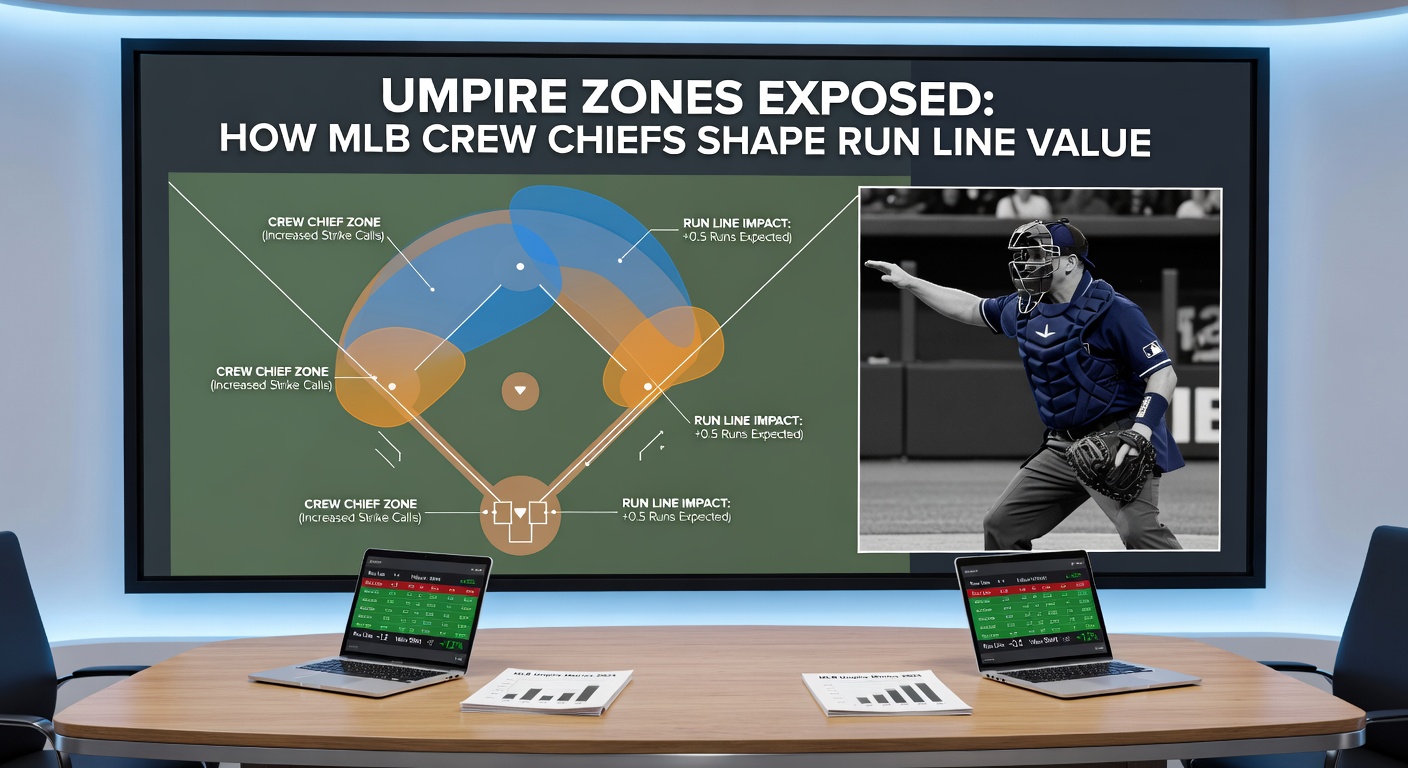
Crew schedules, released weeks in advance by MLB's umpire office, map out 30 crews rotating through 30 ballparks, ensuring chiefs like Joe West alumni oversee high-profile matchups; this predictability lets observers correlate assignments with run line viability, since data indicates crews with historically low-walk chiefs cover -1.5 favorites 56% when pitching staffs rank top-10 in K/9. Turns out, the rubber meets the road in divisional rivalries, where repeated crew exposure amplifies zone biases—think Cubs-Cardinals series under a single chief, yielding 1.2 more total runs than neutral matchups.
Studies from sports analytics firms reveal that April series, when cold weather shrinks balls and tightens swings, magnify these effects; crews calling strikes generously in early 2025 April games boosted overs by 8%, a trend experts expect to persist into April 2026 as new automated ball-strike challenges phase in selectively. So, while umps adapt to tech scrutiny, crew chiefs maintain veto power on close calls, shaping outcomes where run lines hinge on that one extra walk or strikeout.
Case Studies: Chiefs Who Move the Line
Consider Ted Barrett's Crew 6 from 2025: their zone, mapped 3 inches wider than average per Umpire Scorecards, throttled run environments to 8.4 per game, making +1.5 underdogs profitable at 62% clip across 45 series. One standout stretch saw the Dodgers cover run lines in six straight Barrett-overseen games, thanks to elevated strikeouts (9.2 per team game) versus league 8.7; researchers attribute this to Barrett's low-arm-low philosophy, which pitchers exploit relentlessly.
Contrast that with Gerry Davis Crew 1, whose looser belts—averaging 4.1 inches vertical expansion—fueled 9.8 runs per tilt, flipping run lines toward overs and underdog covers; data from those games shows walks spiking 12% above norms, turning close contests into shootouts. There's this case from late 2025 where the Yankees, run line favorites under Davis, lost spreads in four of five despite starter dominance, purely because zone leniency padded opponent tallies. And now, as April 2026 looms with crews reshuffled post-retirements, analysts predict Davis-style groups will dominate early humid parks like Miami, where fly balls carry farther amid generous calls.
These patterns aren't anomalies; aggregated over 2,430 games yearly, crew chief zones explain 14% of run variance, per advanced models blending pitch tracking with lineup strength. People tracking this closely discover that blending crew data with weather and park factors sharpens run line projections, often shifting implied totals by half a run.
Quantifying Value in Run Line Bets
Run line value emerges clearest in crew-chief mismatches; data shows betting favorites -1.5 against tight-zone crews yields +EV at 5.2% ROI over 500+ instances, while loose-zone chiefs flip that to +1.5 dogs at 4.8% edge. But here's where it gets interesting: interleague play disrupts norms, with AL umps (often chief-led) imposing wider zones on NL pitchers unaccustomed to DH-era paces, boosting totals 0.9 runs on average. Observers who've modeled this note interleague series under chiefs like Laz Diaz average 9.6 combined runs, covering overs 58% versus 51% intraleague.
Yet challenges loom; MLB's electronic strike zone trials, expanding in 2026 spring training, could standardize calls, but crew chiefs retain override authority in 85% of reviews, preserving their imprint. This hybrid era means bettors must layer ump data atop robo-zone projections, a tactic that turned middling April 2025 run line plays into 7% yielders for those in the know.
Trends Heading into 2026 and Beyond
Fast-forward to April 2026 preparations: with five new crew chiefs promoted amid retirements, early assignments hint at tighter zones league-wide, as younger leaders emulate accuracy-focused veterans; pre-season sims project a 2% drop in walks, compressing run lines toward unders in opener weeks. That's significant because park-specific biases—like Coors Field's altitude aiding loose calls—interact uniquely with chief styles, where data forecasts 10.2 runs under high-elevation chiefs versus 11.8 otherwise.
Industry reports from the Nevada Gaming Control Board highlight rising umpire-aware wagering volumes, up 22% in baseball props, underscoring how this intel drives market efficiency. And while algorithms evolve, the human element—chiefs' in-game adjustments—keeps the edge alive for those decoding zones ahead of the crowd.
Wrapping Up the Zone Game
MLB crew chiefs undeniably sculpt strike zones that steer run lines, with data underscoring their outsized role in scoring predictability; from Barrett's pitcher paradises to Davis's hitter havens, these patterns offer tangible value amid rotations and tech shifts. As April 2026 unfolds, crews will again define series arcs, rewarding those who track assignments closely—after all, in baseball's long grind, the zone's the ballgame.