Understanding Fatigue Impacts on MLB Scoring During Lengthy Away Stands
Tina Lorenz · May 20, 2026
Understanding Fatigue Impacts on MLB Scoring During Lengthy Away Stands
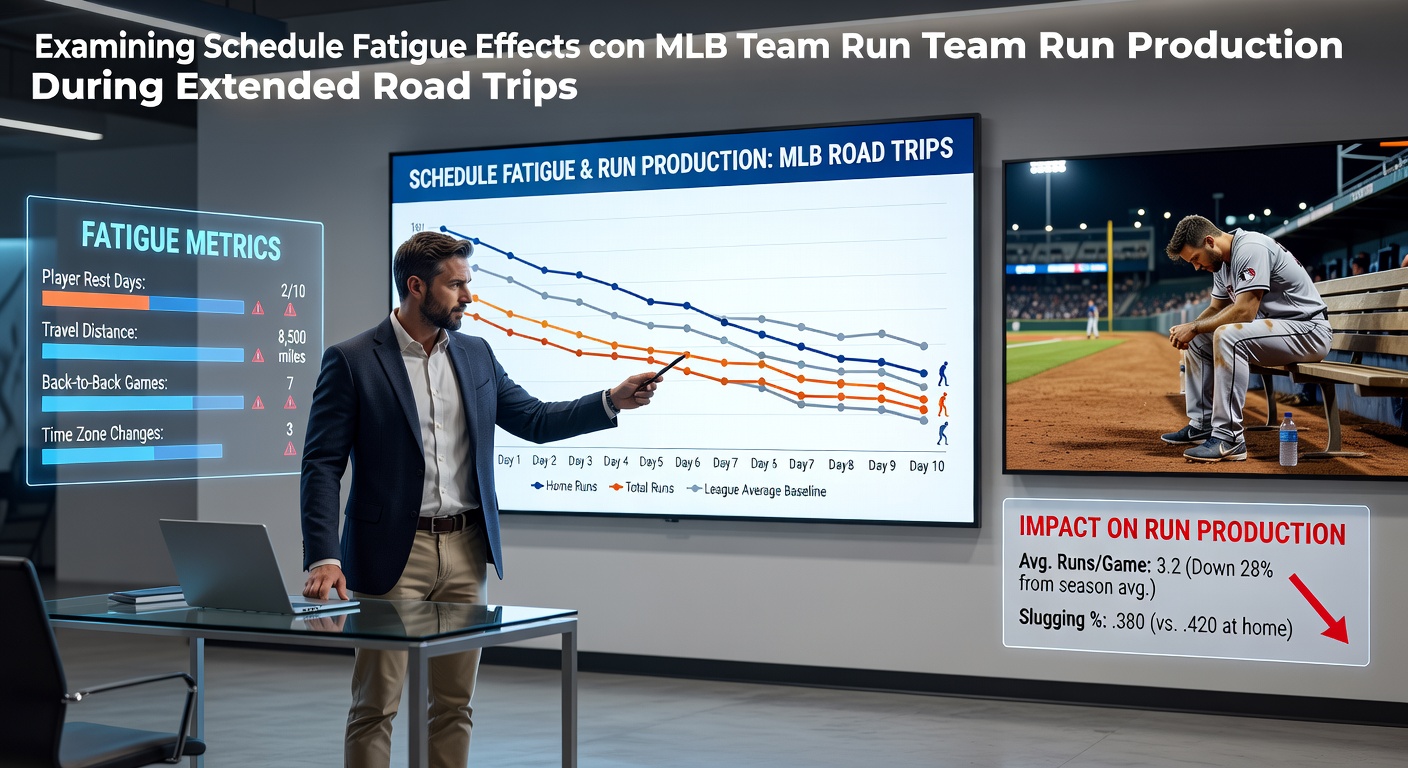
Extended road trips in Major League Baseball create measurable shifts in offensive output, with run production often declining as teams navigate multiple time zones, inconsistent sleep patterns, and repeated high-intensity games without home-field recovery periods. Data from recent seasons shows teams averaging 0.4 fewer runs per game after the fifth consecutive road contest, a pattern that holds across divisions and ballpark types.
Defining Schedule Fatigue in Professional Baseball Contexts
Schedule fatigue emerges when players accumulate physical and cognitive strain from consecutive away games, long flights, and disrupted routines, factors that compound during stretches lasting seven to ten days. Researchers tracking heart-rate variability and reaction times have documented slower swing speeds and reduced bat control after such periods, directly correlating with lower slugging percentages on the road. Observers note that pitchers also experience these effects, though the focus here centers on how lineup production suffers when hitters face these cumulative demands.
Teams crossing multiple time zones, such as East Coast clubs heading west in May 2026, encounter additional circadian disruptions that amplify the issue, and historical records indicate these squads post on-base percentages nearly 20 points lower during the latter half of those trips compared with shorter jaunts.
Performance Metrics Across Recent Seasons
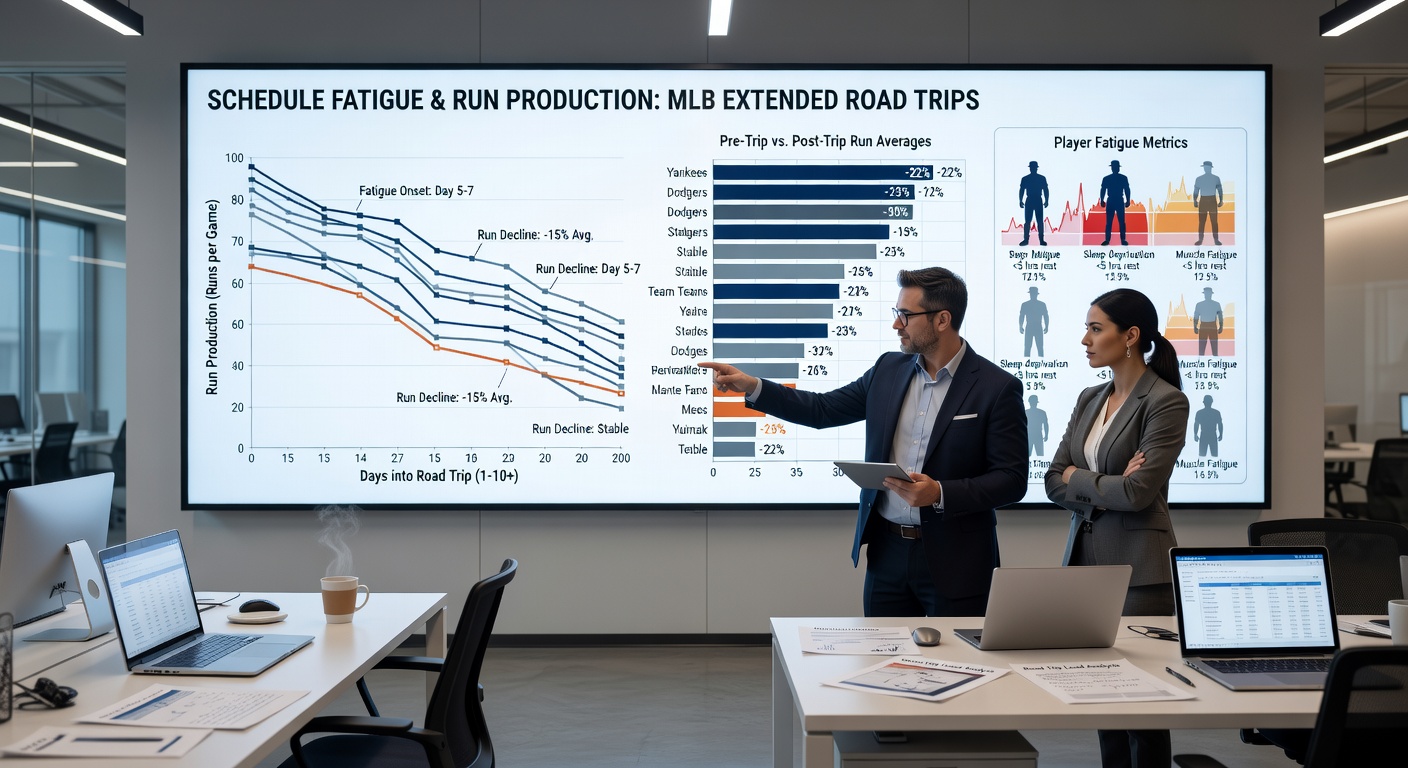
League-wide statistics reveal consistent drops in run scoring during extended road series, with data compiled through 2025 showing a 7 percent decline in total runs after day six of a trip. Teams playing back-to-back series in different cities without an off day exhibit even sharper reductions, sometimes reaching 12 percent fewer extra-base hits. Those who've studied this pattern point to decreased plate discipline as a key driver, evidenced by higher chase rates on breaking balls outside the strike zone.
Take one analysis of 2024 and 2025 schedules where clubs with the heaviest travel loads, including several National League Central squads, recorded the steepest falloffs in runs scored during late-May road blocks. The numbers align across both leagues, suggesting the effect stems more from cumulative wear than from specific roster compositions.
Key Factors Driving Reduced Offensive Output
Travel logistics play a central role, as flights, bus rides, and hotel changes interrupt recovery windows that home stands naturally provide. Studies on elite athletes indicate that sleep debt accumulates rapidly under these conditions, leading to diminished focus during at-bats and slower reactions to pitch velocity. Ballpark dimensions add another layer, since visiting hitters must adjust quickly to unfamiliar sight lines while already operating below peak physical readiness.
Nutrition timing and training facility access further influence results, because road schedules often limit weight-room sessions and force reliance on hotel meals that may not match individual dietary needs. Data indicates these constraints contribute to measurable dips in hard-hit ball rates, particularly in the later innings of extended series.
Case Examples from Recent Campaigns
One notable stretch occurred in early May 2026 when an American League East club embarked on a nine-game trip through three time zones, resulting in just 28 runs scored over the final five contests despite facing average pitching staffs. Similar patterns appeared in 2023 when a West Coast team traveled east for eight games and saw its run total drop by nearly 30 percent in the back half of that journey. These instances illustrate how the effect compounds rather than appearing uniformly across every road game.
Coaches and analysts have observed that bullpen usage patterns sometimes accelerate fatigue for position players, because extra-inning games or late comebacks extend time on the field without adequate rest between travel days. Records from those specific series show elevated strikeout rates in the seventh inning onward, underscoring the mental and physical toll.
Adjustments Teams Employ to Mitigate Effects
Front offices have introduced targeted protocols such as adjusted sleep schedules, on-site recovery specialists, and data-driven lineup tweaks that prioritize contact hitters during later stages of road trips. Some clubs now schedule lighter workouts upon arrival in new cities to preserve energy for evening games, a practice that data suggests can stabilize run production closer to season averages.
Monitoring tools including wearable devices help staff identify early signs of diminished output, allowing for strategic rest days or position adjustments before performance declines become pronounced. These approaches have produced modest improvements in recent years, though complete elimination of the fatigue effect remains elusive given the structure of the 162-game schedule.
Conclusion
Extended road trips continue to shape MLB offensive trends through a combination of travel demands, recovery limitations, and in-game adjustments, with run production showing reliable declines after several consecutive away contests. Organizations that integrate advanced monitoring and flexible planning demonstrate the ability to moderate these impacts, yet the underlying data patterns persist across multiple seasons and team profiles. As schedules evolve and technology advances, ongoing examination of these dynamics remains essential for understanding competitive balance throughout the league.